The Artist
Irène
Ordonneau
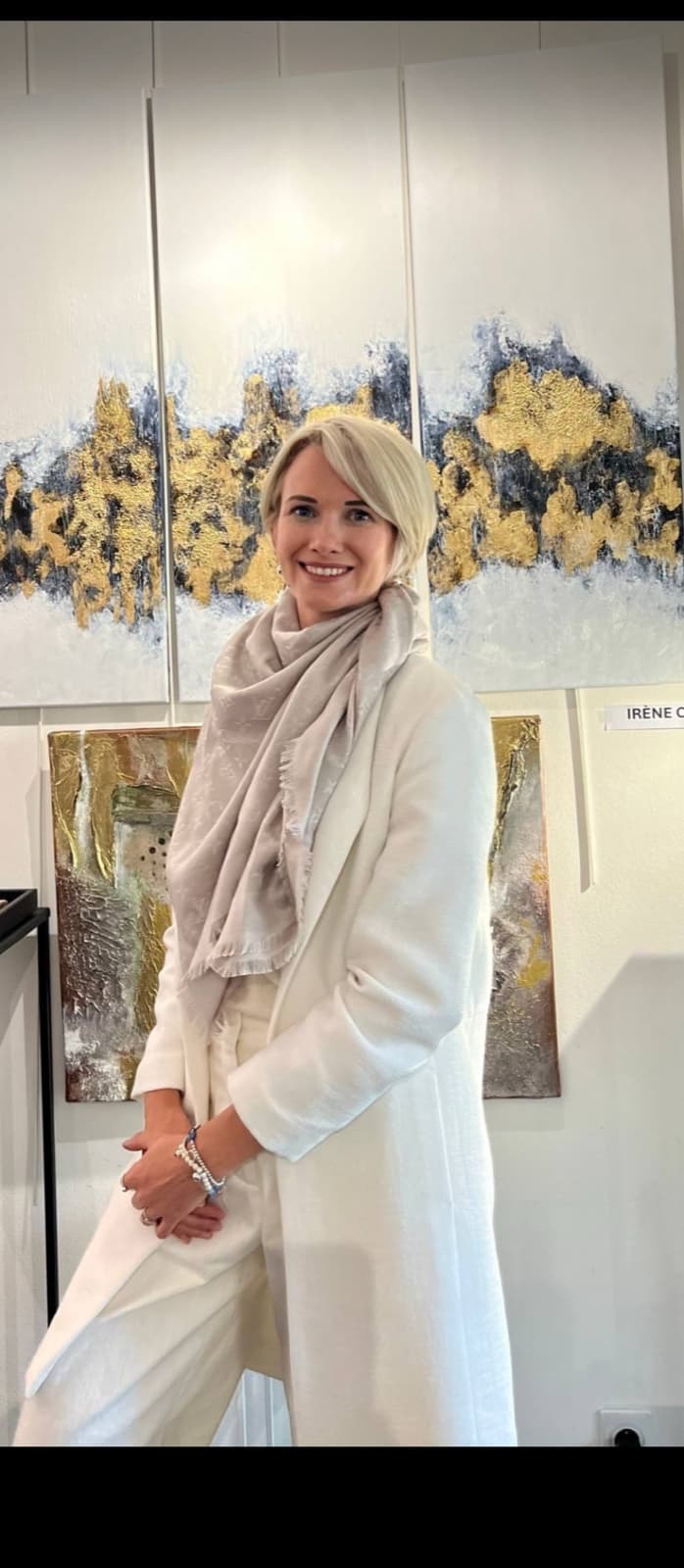
“The real magic happens when we embrace our own essence.”
Irène Ordonneau is a Ukrainian-born abstract artist based in Bali. Her paintings grow from silence, sensation, and the conviction that some truths can only be felt before they are understood.
Her practice brings together acrylic, texture paste, cotton, and gold to create surfaces that hold memory, interruption, softness, rupture, and return. The paintings are not designed to explain emotion. They are built to carry it.
Irene’s story as an artist is inseparable from courage. In one of her public reflections, she recalls being told as a child that she could not draw. Years later, she still chose creation. That quiet persistence now sits at the center of the work: art as permission, self-trust, and transformation made visible.
Born in Ukraine
A life shaped by movement, contrast, memory, and inner rebuilding.
Based in Bali
Rooted in an environment where ritual, nature, and symbolism stay close to daily life.
Exhibited in Europe & Asia
Developing a public practice through fairs, galleries, and collaborative exhibition spaces.
Philosophy
Irene often writes about presence, honesty, and the courage to make the invisible visible. In her world, abstract painting is not decoration. It is a meeting point between inner life and shared perception.
Bali has deepened this philosophy. The rhythm of ritual, offering, symbolism, and natural force appears not as direct illustration, but as atmosphere. Tradition, texture, and invisible energy become part of the same language.
The Practice
Materials & Process
Irene’s process is tactile, layered, and intuitive. She builds, scrapes back, interrupts, and returns. Every surface keeps a visible history, allowing the work to hold both fragility and force.
Acrylic
Used for immediacy, layering, and movement. Colour becomes emotional weather rather than illustration.
Texture Paste
Creates relief, friction, and physical memory on the surface, changing with light and viewing distance.
Cotton
Introduces softness, fibre, and vulnerability, letting the material body of the work stay visibly alive.
Gold
Not ornamental but symbolic: light after rupture, resilience after fracture, value discovered through transformation.
Continue